

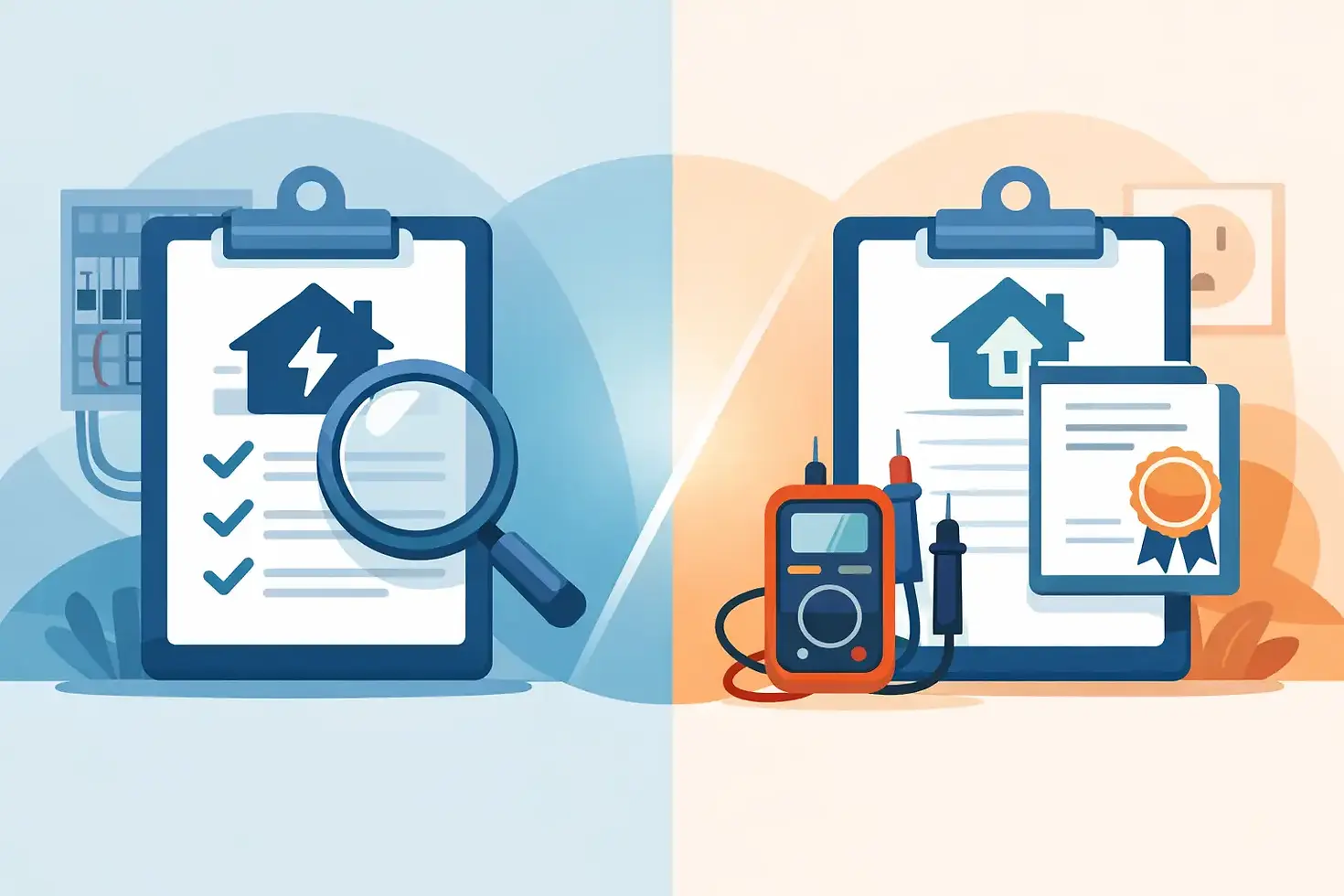
EICR vs Electrical Installation Certificate
- Jul 4
- 6 min read
If you have been asked for paperwork after electrical work, the question is often not whether you need a certificate, but which one. The difference between eicr vs electrical installation certificate catches out homeowners, landlords and business owners all the time, especially during renovations, property sales, lettings and remedial works.
The two documents are not interchangeable. They serve different purposes, are issued at different stages, and tell you different things about the condition of an electrical system. If you request the wrong one, you can end up with the wrong inspection, the wrong evidence for compliance, or a delay when you need sign-off quickly.
EICR vs electrical installation certificate - the simple difference
An Electrical Installation Condition Report, usually shortened to EICR, is a report on the safety and condition of an existing electrical installation. It is used to assess whether a property's wiring, consumer unit, earthing, bonding and fixed electrical components remain safe for continued use.
An Electrical Installation Certificate, or EIC, is issued for new electrical installation work or for alterations and additions where a certificate is required under BS 7671. It confirms that the work has been designed, installed, inspected and tested in line with the relevant standards at the time it was completed.
In simple terms, an EICR looks back at what is already there. An Electrical Installation Certificate signs off new work that has just been carried out.
That distinction matters. If you have rewired a house, installed a new circuit, fitted a new consumer unit or completed a major electrical alteration, you would usually expect certification for the new work. If you are checking the condition of an older installation in a rented property, shop, office or family home, you would usually need an EICR.
What an EICR is actually for
An EICR is not a certificate of new work. It is a formal inspection and testing report. The electrician checks the fixed wiring and associated components to identify wear, deterioration, damage, non-compliances and potential risks.
This includes things like outdated protective devices, signs of overheating, inadequate earthing, poor bonding, overloaded circuits, unsuitable previous alterations and general deterioration over time. The report then codes observations according to their severity. Some issues require urgent action, while others are improvements recommended to bring the installation closer to current standards.
For landlords, an EICR is often a legal requirement. For commercial premises, it is a key part of ongoing electrical safety management. For homeowners, it is strongly recommended when buying an older property, planning major refurbishment, or if the installation has not been inspected for many years.
An EICR does not mean the installation is brand new. It also does not guarantee that no issue will ever develop later. It gives a professional assessment of the installation's condition at the time of inspection.
When you would typically need an EICR
You would usually arrange an EICR for periodic inspection of a rented property, a commercial unit, an HMO, or an owner-occupied home with ageing electrics. It is also common before a property purchase, after a period of neglect, or where there are signs of faults such as tripping, damaged accessories or overheating.
If you are trying to prove that an older installation has been inspected and tested for safety, this is the right document.
What an Electrical Installation Certificate is for
An Electrical Installation Certificate is used when electrical work has been carried out and that work requires formal certification. It confirms that the installation work was properly designed, installed, inspected and tested in accordance with BS 7671.
This is the document you would expect after a full rewire, a new consumer unit in many cases, a new circuit for an extension, or significant alteration work in a domestic or commercial setting. It is part of the handover for the new installation.
The certificate is tied to the actual work completed. It records key test results and confirms responsibility for design, construction and verification. Depending on the job, it may be accompanied by building regulations notification where relevant.
This means an EIC is evidence that a specific installation or alteration was completed to the required standard at the time it was installed. It is not a broad health check of the entire property's existing electrical system unless the job itself covered the whole installation.
When you would typically need an Electrical Installation Certificate
You would usually receive an EIC after a new installation, a rewire, a new distribution board arrangement in some projects, or major additions and alterations. If you are extending your property, converting a loft, fitting out a commercial unit, or carrying out substantial electrical works, this is the document that signs off the installation work.
If your project is smaller, such as certain minor additions or alterations, the correct document may instead be a Minor Electrical Installation Works Certificate rather than a full EIC. That is one reason it helps to ask your electrician exactly what certification will be issued before work starts.
Why people confuse the two
The confusion usually comes from the fact that both documents involve inspection and testing, and both relate to compliance and safety. To a customer, they can sound similar because each one ends with paperwork from an electrician.
But they answer different questions.
An EICR answers: is this existing installation in a satisfactory condition for continued use?
An Electrical Installation Certificate answers: was this new electrical work installed and tested correctly when it was completed?
That difference is especially important for landlords and property managers. If a letting agent asks for proof that a rental property's electrics are safe, they will usually mean an EICR for the current installation. Handing over an old installation certificate from a rewire done years ago may not meet that requirement. On the other hand, if a new consumer unit has just been fitted, an EICR is not a substitute for the correct installation certification for that work.
EICR vs electrical installation certificate for landlords and property owners
For landlords, the safest approach is to think in terms of both ongoing condition and new work. An EICR supports periodic compliance for the installation as a whole. An Electrical Installation Certificate supports compliance for new electrical works you have had carried out.
For homeowners, the same principle applies. If you have just renovated your kitchen and added new circuits, you should expect certification for that installation work. If you are unsure whether the rest of the property's wiring is ageing, overloaded or no longer suitable, that is where an EICR becomes valuable.
For commercial clients, the distinction can affect insurance, maintenance planning and handover documentation. New fit-out works need correct certification. Existing premises also need periodic inspection at appropriate intervals based on the type of occupancy and use.
There are cases where you may need both. For example, during a refurbishment, new circuits may be certified with an EIC, while the wider installation may also need an EICR if there are concerns about the older parts of the system or if the building is due for periodic inspection.
Which document should you ask your electrician for?
If the electrician has completed new installation work, ask what certification applies to that exact job. For substantial works, that will often be an Electrical Installation Certificate. For smaller qualifying works, it may be a Minor Electrical Installation Works Certificate.
If you need an assessment of the safety and condition of an existing installation, ask for an EICR.
It is worth being specific. Saying you need an electrical certificate can lead to crossed wires. A qualified electrician should explain what is appropriate for the job, what is covered, and whether any remedial work is likely if issues are found.
A professional contractor will also make clear that neither document should be treated as a box-ticking exercise. Good certification matters because it creates a traceable record of work, testing and condition. That protects property owners, helps future electricians understand the installation, and supports safety over the long term.
The practical point that matters most
When comparing eicr vs electrical installation certificate, the key is this: one checks the condition of what already exists, and the other certifies new work that has just been completed. Once that is clear, the paperwork becomes far less confusing.
If you are not sure what your property needs, the best next step is to describe the situation clearly - whether it is a rewire, an extension, a rental inspection, a shop fit-out or an older installation that has not been tested for years. An experienced electrician can then advise on the correct inspection, testing and certification route.
Getting the right document first time saves hassle, avoids compliance gaps and gives you proper evidence that the electrical work in your property has been checked to the right standard. That peace of mind is worth more than a sheet of paper alone.


Comments